
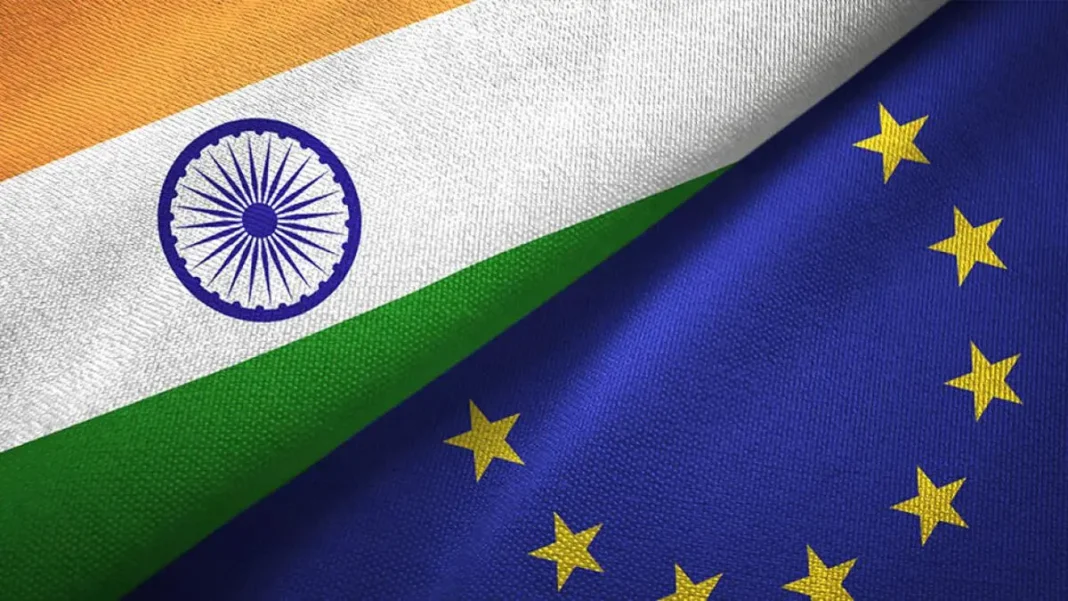

The India–European Union Free Trade Agreement (FTA) is poised for finalization, with countries expected to sign the landmark pact during the 16th India–EU Summit in New Delhi on January 27, 2026. While the agreement promises to significantly deepen economic ties between India and Europe, its timing is inseparable from the current geopolitical churn—marked by renewed American protectionism, transatlantic trade tensions, and an accelerating shift toward a multipolar world order.
Negotiations on the India–EU FTA have unfolded over years, reflecting the complexity of aligning two large and diverse economies. The proposed agreement aims to liberalize trade in goods and services, reduce tariffs, improve regulatory cooperation, and expand collaboration in areas such as digital trade, green technology, critical minerals, and resilient supply chains. Its conclusion would make it one of India’s most comprehensive trade agreements to date.
The geopolitical backdrop, however, has injected new urgency into the deal. Under the current presidency of Donald Trump, the United States has revived a hardline, transactional trade approach. The reimposition and threat of tariffs on European exports—particularly in industrial goods, metals, and automobiles—have once again strained U.S.–EU economic relations. Trump’s tariff diplomacy, framed as protecting American industry, has reinforced European concerns over the unpredictability of U.S. trade policy.
For the European Union, this environment has accelerated the search for reliable and diversified economic partners. Strengthening ties with India—one of the world’s fastest-growing major economies—offers Europe both market expansion and strategic insurance against overdependence on the United States or China. The India–EU FTA acts as a safety option at a time when relations between the US and Europe are uncertain.
India’s calculus is equally strategic. While New Delhi maintains a strong and growing partnership with Washington, the FTA underscores India’s pursuit of strategic autonomy. By deepening engagement with Europe, India positions itself as an independent economic pole rather than a subordinate partner in any single power bloc. The agreement also supports India’s ambition to integrate more deeply into global value chains relocating away from China.
In the broader power game, the India–EU FTA reflects a realignment driven less by ideology and more by economic security. As U.S. protectionism, EU diversification, and China’s contested role in global trade converge, India emerges as a critical balancing partner in the evolving international order.
The upcoming signing of the India–EU Free Trade Agreement is not just about trade. It is a strategic step taken in response to Trump-era tariff policies, changing global supply chains, and a divided but connected world economy.